Predictive maintenance and lifetime prediction: forecasting failures before they happen
Failures are expensive – as warranty costs on the vehicle, as unplanned downtime in production. We predict them, with two separately bookable modules – condition monitoring for production equipment and lifetime prediction for vehicle components with censoring-capable reliability statistics.
The situation
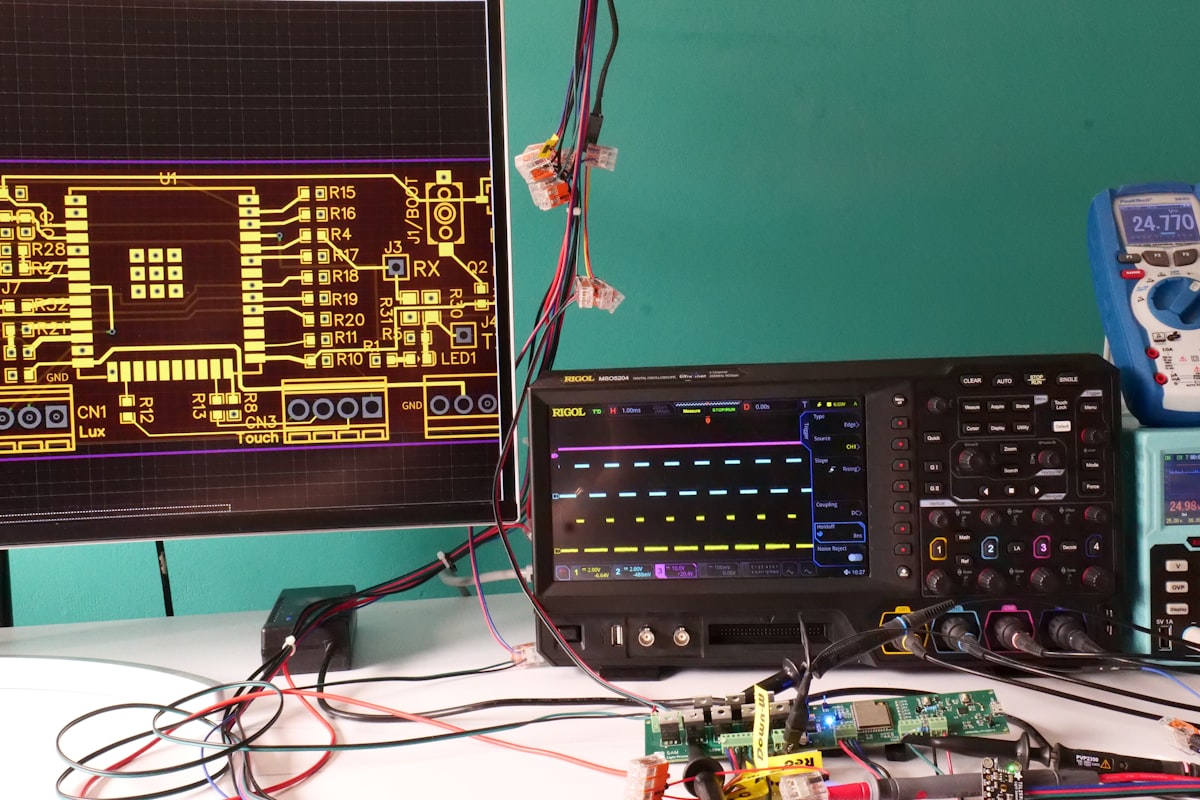
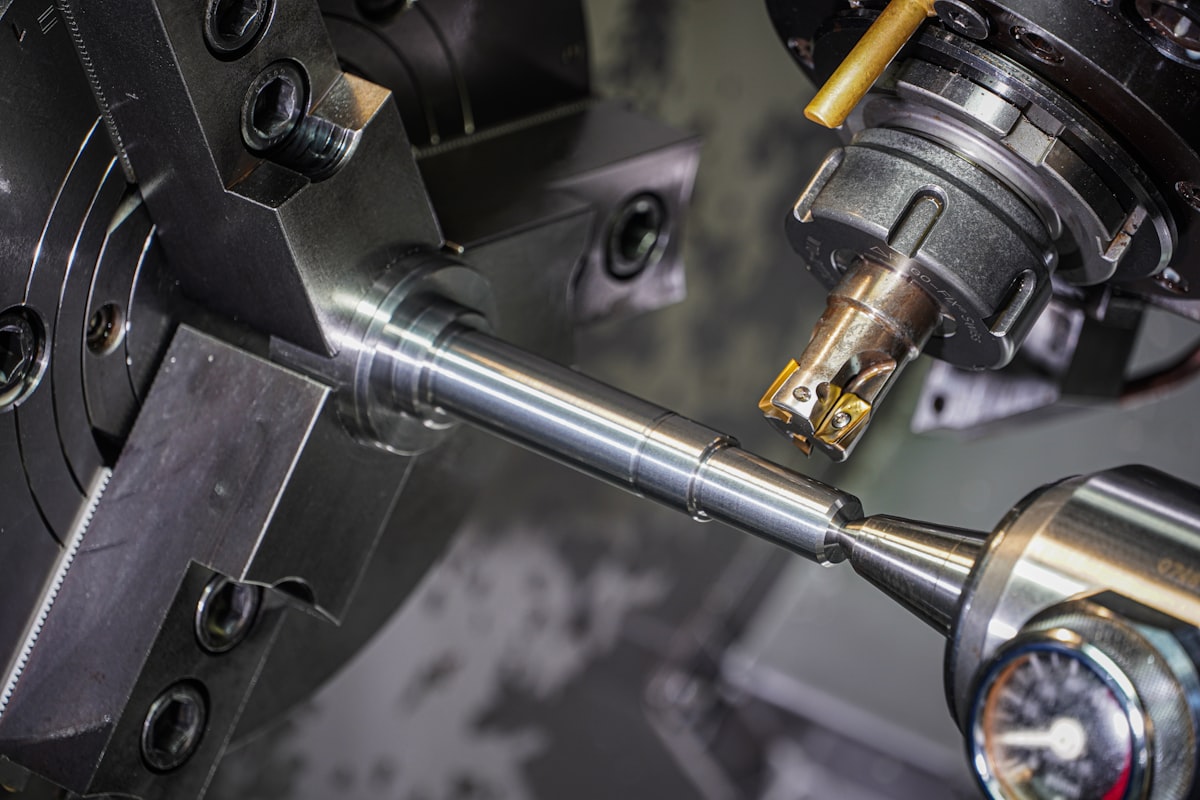
In production, many failures announce themselves in the sensor data – in vibrations, temperatures, currents – long before the machine stops. That signal is rarely used: maintenance happens on schedule or after failure.
For vehicle components, design often rests on blanket usage assumptions instead of real load spectra, and warranty provisions rest on past experience instead of a statistically sound failure prediction.
Typical data basis
For condition monitoring: sensor data as time series – vibration, temperature, currents, pressures –, the machines' operating data, status and fault messages, and the maintenance and failure history with service reports and spare parts consumption.
For lifetime prediction: measured or simulated load time series from testing and field operation with the load spectra derived from them, material and component characteristics, S-N curves and design data, plus field and warranty data with installation date, mileage and failure mode.
The part most often overlooked: the population of components that have not yet failed. It is just as important for a sound estimate as the failures themselves.
Why such initiatives fail
Few failures, little to learn from. The failure modes that matter are rare. The model has to learn reliably from heavily imbalanced data and few real failure cases.
"Still running" is information too. Many units are still in operation at the time of analysis. Ignoring these censored observations produces systematically biased predictions.
History needs context. Maintenance and repair data is often patchy or inconsistently documented. Reliable labels only emerge together with the maintenance crews.
No data stream, no prediction. Missing sensors partly have to be retrofitted, and machine data has to be connected reliably via streaming.
Alert floods destroy trust. A warning has to be relevant. Thresholds are deliberately chosen to produce few but reliable alerts – instead of alert floods and alert fatigue.
Approach
Module 1: condition monitoring. On the sensor time series we build features per time window with statistical measures, trends and frequency-domain features, including envelope analysis on the known damage frequencies for rolling bearings. On these features, gradient boosting handles condition assessment and sequence models capture temporal patterns. Where failure labels are missing, an autoencoder detects deviations from learned normal behaviour. Pretrained time series models (Chronos, TimesFM, Moirai) serve as a fast baseline against which the benefit of a custom-trained model can be judged. The pipeline follows the pattern sensors, streaming, data platform, feature store, training, MLOps, alerting; models are monitored and retrained on detected drift. Alert thresholds and maintenance recommendations are agreed with the maintenance organisation.
Module 2: lifetime and fatigue strength. Here the established fatigue methods apply, complemented by statistics and machine learning – not replaced by them. Rainflow counting turns load time series into load spectra; the S-N curve and linear damage accumulation after Palmgren-Miner then yield the calculated damage. Machine learning contributes in three places: it transfers available operating quantities onto load spectra where no measuring point exists; it speeds up damage calculation via surrogate models when many variants or usage profiles need assessing; and it assigns vehicles to spectrum classes by their actual usage profile instead of calculating with an average customer.
Failure probability over operating time we model with reliability statistics that treat censored observations correctly: Weibull fits per failure mode, Cox models and censoring-capable learners such as random survival forests or accelerated failure time models. The result is not a yes/no statement but a survival curve per component variant and usage profile with a confidence band – and, derived from it, remaining useful life and reliable statements on service intervals and warranty provisions.
What you get
Module 1: unplanned downtime decreases, maintenance becomes plannable, and spare parts planning improves because demand shows earlier. Measured by the warning lead time before an event, the number of false alarms per week and the share of failures the system flagged in advance – all three collected in the pilot and agreed as the acceptance criterion.
Module 2: design rests on the real usage profile instead of blanket assumptions, critical designs surface earlier, and service intervals and warranty provisions rest on a statistically sound basis. Model quality is demonstrated by comparing the predicted with the observed failure distribution on held-out field cohorts.
Where our experience comes from
Predictive maintenance and failure prediction have been part of our core business for years – on production equipment as well as in vehicle programmes.
Last updated: 13 August 2026